
Generative A.I. & Firefly
Adobe could barely wait to unleash what feels like a bludgeoning of yet another instance of generative A.I. at it opening keynote for Summit this year. Although this time it is slightly different and significantly more focused on Adobe’s new Firefly.
Adobe’s goal at this year’s summit was clearly about the integration of A.I. into its workflows for analytics, experience, and most importantly creative generation. Firefly is the main proponent of Adobe’s new generative A.I. model that supports text-to-image for content boding a major disruption to many companies’ workflow and creative process. Adobe is expecting Firefly to support creatives and accelerate their ability to make content quicker while keeping costs down.
“We believe A.I. will extenuate human ingenuity as a co-pilot and not replace it”
– Shantanu Naraya Adobe’s CEO
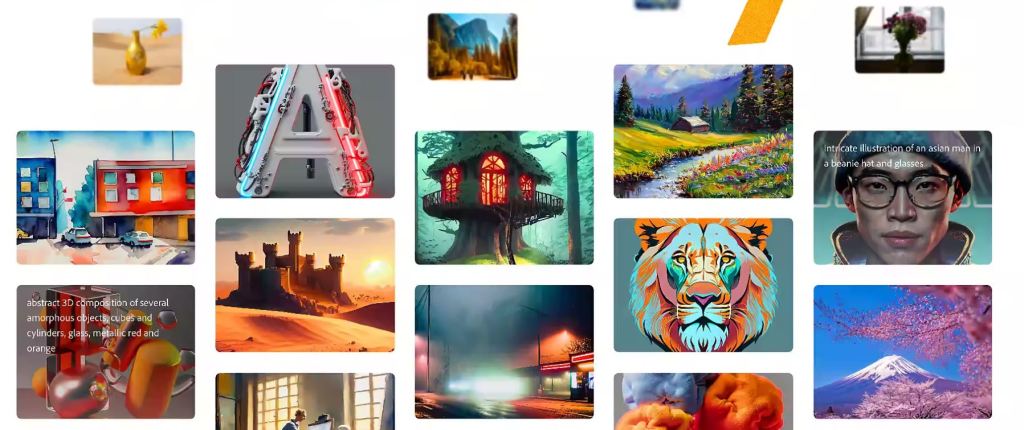
I agree that is how A.I. should be used, but every company isn’t going to take that approach. It’s much easier to compile content than create it. Shantanu believes this technology is going to help companies control cost and scale creative production. CFOs around the world are going to focus on leveraging technology to cut costs at the expense of talent. We’re going to enter a period of some bad creative that’s regressive to the most common denominator.
Why? Once you get used to an image it’s very difficult to divert from it and develop something new. This concept is explained by a video from the YouTube channel Every Frame a Painting which discusses the issue of “temp music” (overlaying soundtrack from a different movie as filler during editing while the real composition is being created). This temp music then affects creative direction for the final score because directors get so familiar with the filler music. If you have time for a rabbit hole (discussion of temp music starts at the 6 minute mark). If I type in “lion” and Firefly spits out a lion, it’s going to be hard for creatives to deviate from that concept over time. It will eventually be what everyone sees as the “right” or most common depiction based on its familiarity. Over time models are going to generate the same simple concept of a lion because that’s what “works” or is familiar, and concepts will start to blend.
This leads us to a very interesting competitive advantage Adobe has in that its model is trained on licensed work owned by Adobe. Artists are already getting their work stolen by other A.I. companies as they train their model, but Adobe is using its massive resources to provide entirely owned content to mitigate legal risk for its users. Adobe even anticipates adding content tags for images generated by A.I. for transparency, as well as platform controls to ensure your art doesn’t get used or seen by Firefly.
However, it’s important to remember that this technology is a lot of sizzle and no steak. Accessible generative A.I. is still new. There are no true Digital Content Creative Managers with 5+ years of experience. The technology hasn’t been made readily accessible to the public. Everyone with experience is experimenting, and that can be costly for a business. Adobe is even hedging on its own site regarding Firefly. Look at a few of the quotes on their launch site for the tool:
- “Looking forward, Firefly has the potential to do much, much more…”
- “Firefly is gearing up…”
- “We plan to build this into Firefly… “
- “We’re exploring the potential…”
- “With Firefly, the plan is to do this and more…”
- “In the future, we hope to enable…”
Yes, I understand that it’s in Beta, but this feels reactionary. Microsoft’s ChatGPT went viral, and everyone is scrambling to show, “we’ve been working on this a long time”. Google rapidly launching Bard (and losing Billions in market cap), and now Firefly doesn’t give me a lot of confidence in the practical applications of this technology.
With that said am I excited about the potential for the new technology ? Hell yes.
The technology looks amazing, and A.I. is going to change how we work. There are some positive things that A.I. is going to affect in the creative workflow. It’s going to greatly support and enhance ideation, whiteboarding, and concepts as these processes integrate with the workflow and become more mature. A.I. support is coming. We’re going to have to adapt and learn how to effectively use the technology to our advantage.
Which leaves us with a very important question –do we invest? My answer is no. Not yet.
Money or time invested in generative A.I. at this stage is going to be experimental. True value and cost savings have yet to be identified. The best people to leverage generative A.I. content are going to be the best creative designers today once they learn the new technology and how to communicate with it. The best path forward for agencies and companies is to create space for your employees to play and let them identify how the new technology can provide value to your organization. This technology isn’t going to change everything tomorrow, but you are going to have to understand it and integrate it into your business model over the next three years.
This post isn’t generated by A.I.… Really. Is there a captcha for this?
 David Campanella's Blog
Leave a comment